
Helmet
Unknown Artist
ca. 1560
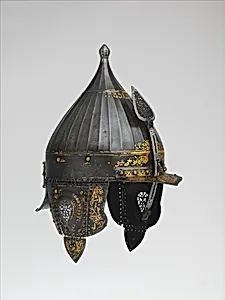
Medium
Steel, iron, gold, silver, copper alloy
Dimensions
H. 10 3/4 in. (27.8 cm); Wt. 5 lb. 11 oz. (2580 g)
Classification
Helmets
Culture
Turkish, probably Istanbul
Department
Arms and Armor
Museum
Metropolitan Museum of Art, New York, NY
Credit
Rogers Fund, 1904
Accession Number
04.3.456a
Rights
Public Domain
Art Historical Context
This striking steel helmet, forged around 1560 in Ottoman Turkey—likely the imperial workshops of Istanbul—exemplifies the pinnacle of 16th-century arms craftsmanship. Standing 10¾ inches tall and weighing a hefty 5 pounds 11 ounces, it was engineered for combat, with a robust iron and steel core providing vital head protection for warriors on the battlefield. Its classification as a helmet in the Metropolitan Museum of Art's Arms and Armor collection underscores its role in the martial culture of the Ottoman Empire, then at its zenith under Sultan Suleiman the Magnificent. What elevates this anonymous work is its lavish embellishment with gold, silver, and copper alloy, transforming a utilitarian object into a symbol of status and power. These precious metals, applied through skilled techniques common in Ottoman metalwork, would have gleamed under the sun, signaling the wearer's elite rank—perhaps a sipahi cavalryman or janissary officer. Such decorations blended functionality with artistry, reflecting Istanbul's position as a crossroads of Persian, Byzantine, and Islamic influences. Acquired through the Rogers Fund in 1904, this helmet invites visitors to ponder the human stories behind the armor: the clang of forges, the thunder of hooves, and the enduring legacy of Turkish ingenuity in blending war and beauty.