
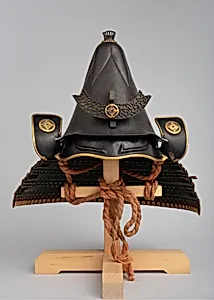
Helmet in the Shape of an Eggplant
17th century
Medium
Iron, lacquer, copper, gold, copper-gold alloy (shakudō), silk
Classification
Helmets
Culture
Japanese
Department
Arms and Armor
Museum
Metropolitan Museum of Art, New York, NY
Credit
Bequest of George C. Stone, 1935
Accession Number
36.25.164a–d
Rights
Public Domain
Art Historical Context
Step into the whimsical world of Edo-period Japan with the *Helmet in the Shape of Eggplant* by master armorer Saotome Ietada, crafted in the 17th. This extraordinary kabuto, or samurai helmet, transforms a humble vegetable into a striking symbol of ingenuity and status. Shaped like a bulbous eggplant, complete with a leafy stem finial, it exemplifies the playful creativity of Japanese arms and armor during a time of relative peace, when helmets evolved from battlefield necessities into elaborate fashion statements. Forged from iron and adorned with lacquer, copper, gold, and shakudō—a copper-gold alloy prized for its rich, dark patina—the helmet showcases Ietada's virtuoso metalworking. Silk elements likely enhanced its cords or linings, adding a touch of luxury. These techniques, rooted in centuries-old traditions, highlight the fusion of functionality and artistry, where even protective gear became a canvas for opulent decoration. Housed in the Metropolitan Museum of Art's Arms and Armor Department (bequest of George C. Stone, 1935), this piece reveals the cultural flair of samurai elite, blending humor with high craftsmanship. Imagine a warrior donning this on parade—equal parts formidable and fantastical!