
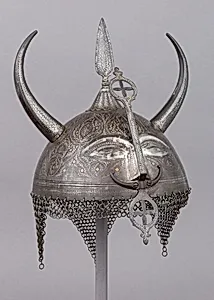
Helmet (Khula Khud) with Horns
Unknown Artist
19th century
Medium
Steel, silver, gold
Dimensions
H. including mail 13 in. (33 cm); H. including nasal 10 1/4 in. (26 cm); H. excluding mail and nasal 8 1/4 in. (21 cm); W. 8 3/4 in. (22.2 cm); D. 8 3/4 in. (22.2 cm); Wt. 1 lb. 3.9 oz. (564.2 g)
Classification
Helmets
Culture
Indian
Department
Arms and Armor
Museum
Metropolitan Museum of Art, New York, NY
Credit
Gift of David Alexander, 1986
Accession Number
1986.316
Rights
Public Domain
Art Historical Context
This exquisite 19th-century Indian, known as a *khula khud* with, exemplifies the masterful fusion of form and function in South Asian arms and armor. Crafted from steel, with intricate silver and gold inlays, it measures about 13 inches high including its chainmail neck guard (aventail), weighs just over a pound, and features an open-faced design for optimal visibility and ventilation in combat. The prominent horns—likely symbolic of strength and ferocity—add a dramatic flourish, while the nasal bar provided targeted facial protection. Originating from the Indian subcontinent during a period of regional kingdoms and colonial encounters, the *khula khud* was favored by warriors for its lightweight mobility and defensive prowess. The opulent silver and gold damascening techniques showcase the high level of artisanal skill in Mughal-influenced workshops, transforming a practical helmet into a status symbol for elite cavalry or nobility. A generous gift to the Metropolitan Museum of Art in 1986, this helmet invites us to appreciate the cultural reverence for martial artistry in 19th-century India, where beauty and battle readiness coexisted seamlessly.