
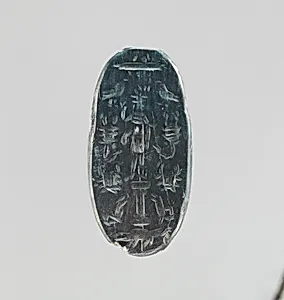
Hematite intaglio: Lion-headed god
Unknown Artist
ca. 2nd–3rd century CE
Medium
Hematite
Dimensions
H.: 1 5/16 in. (3.3 cm)
Classification
Gems
Culture & Period
Roman · Imperial
Department
Greek and Roman Art
Museum
Metropolitan Museum of Art, New York, NY
Credit
The Cesnola Collection, Purchased by subscription, 1874–76
Accession Number
74.51.4299
Rights
Public Domain
Tags
Art Historical Context
This exquisite hematite intaglio, dating to the 2nd–3rd century CE, a lion-headed god flanked by birds and scorp, embodying the mystical and protective symbolism of late Roman Imperial art. Carved in intaglio—a technique where the design is incised into the stone's surface for use as a seal or signet—the gem measures just 1 5/16 inches (3.3 cm) high, making it a portable talisman likely worn as jewelry or carried for personal protection. Hematite, with its metallic luster and durability, was prized for such miniature sculptures, allowing fine details to emerge when impressed into wax or clay. In the Roman world, these gems bridged everyday utility and esoteric beliefs, often invoking hybrid deities blending Greco-Roman, Egyptian, and Eastern influences. The lion-headed figure evokes powerful chthonic gods associated with the underworld, renewal, and warding off evil, while scorpions symbolize death and rebirth, and birds may represent souls or divine messengers. Such motifs appear on "magical" gems, used in rituals or as amulets during a time of religious syncretism. Part of The Cesnola Collection at The Metropolitan Museum of Art's Greek and Roman Art Department, this intaglio offers a glimpse into the intimate spiritual lives of Romans, highlighting how art served both the practical and the supernatural in the Imperial era.