
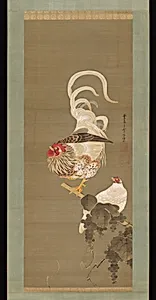
伊藤若沖筆 葡萄双鶏図|Hen and Rooster with Grapevine
1792
Medium
Hanging scroll; ink and color on silk
Dimensions
Image: 40 1/8 x 16 1/4 in. (101.9 x 41.3 cm) Overall with mounting: 72 3/4 x 21 3/8 in. (184.8 x 54.3 cm) Overall with knobs: 72 3/4 x 23 3/4 in. (184.8 x 60.3 cm)
Classification
Paintings
Culture & Period
Japan · Edo period (1615–1868)
Department
Asian Art
Museum
Metropolitan Museum of Art, New York, NY
Credit
The Harry G. C. Packard Collection of Asian Art, Gift of Harry G. C. Packard, and Purchase, Fletcher, Rogers, Harris Brisbane Dick, and Louis V. Bell Funds, Joseph Pulitzer Bequest, and The Annenberg Fund Inc. Gift, 1975
Accession Number
1975.268.69
Rights
Public Domain
Tags
Art Historical Context
Behold *Hen and Rooster with Grapev* (葡萄双鶏図), a captivating hanging scroll painted in 1792 by Itō Jakuchū (1716–1800), one of Japan's most innovative Edo-period artists. Jakuchū, originally a Kyoto vegetable merchant, brought a fresh, almost flamboyant realism to traditional Japanese painting, blending meticulous detail with bold colors and dynamic compositions. This ink and color on silk work, measuring about 40 x 16 inches in its image area, exemplifies his with nature's vitality, rendered in the elegant format of a hanging scroll meant for seasonal display in homes or temples. Created late in Jakuchū's career during the prosperous Edo period (1615–1868), the painting features a hen and rooster amid lush grapevines, symbols of abundance and harmony in Japanese culture. His technique shines through intricate feathering that captures the birds' iridescent plumage and textured grapes bursting with juice-like realism, achieved via layered ink washes and vibrant mineral pigments. This fusion of precision and exuberance reflects Jakuchū's departure from conventional styles, influencing later generations and earning him posthumous acclaim. Today, housed in the Metropolitan Museum of Art's Asian Art collection (1975 acquisition), this scroll invites viewers to marvel at Edo Japan's artistic ingenuity—where everyday motifs like chickens and grapes transcend the mundane, evoking life's joyful rhythms.
About the Artist
Itō Jakuchū · 1716–1800
Painter and printmaker of the Middle Edo period. He studied the methods of the Kanō School, but soon became dissatisfied and began to turn to the works of the Chinese masters of the Song and Yuan periods for inspiration. He believed the true art of painting lay in the faithful representation of nature, excelling in depictions of plants and animals. His work is distinguished by bright colors, decor...