
Henri Du Plessis
1601 to 1650
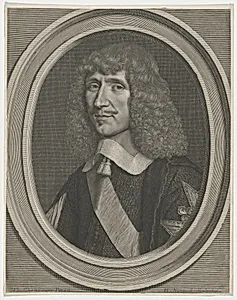
Medium
engraving
Dimensions
sheet: 32 × 25.5 cm (12 5/8 × 10 1/16 in.)
Classification
Department
CG-E
Museum
National Gallery of Art, Washington, D.C.
Credit
Rosenwald Collection
Accession Number
1950.14.568
Rights
Public Domain
Art Historical Context
This engraving by Robert Nanteuil captures the likeness of Henri Du Plessis, rendered after an original design by the celebrated French Baroque painter Philippe de Champaigne. Created between 1601 and 1650, the work exemplifies the refined portrait tradition of seventeenth-century France, such prints served both as personal tributes and as widely circulated images of notable figures. Nanteuil, one of the era’s foremost engravers, translated Champaigne’s painted composition into the precise lines and subtle tonal gradations possible through the engraving medium. Measuring 32 by 25.5 centimeters, the print demonstrates the technical mastery required to convey texture, fabric, and expression on a copper plate. Engravings like this played a vital cultural role, allowing portraits to reach audiences beyond the original painting’s location and preserving the sitter’s image for posterity. As part of the Rosenwald Collection at the National Gallery of Art, the work offers visitors a window into the collaborative artistic practices and the growing importance of printmaking in early modern Europe.