
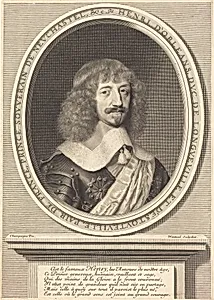
Henri II d'Orléans, Duc de Longueville
Medium
engraving
Classification
Department
CG-E
Museum
National Gallery of Art, Washington, D.C.
Credit
Rosenwald Collection
Accession Number
1943.3.6532
Rights
Public Domain
Art Historical Context
Behold the striking portrait engraving *Henri II d'Orléans, de Longueville*1655), a masterful collaboration between engraver Robert Nanteuil painter Philippe de Champa. Nanteuil, one of 17th-century France's premier portrait engravers, translated Champaigne's original painting into intricate lines, capturing the duke's noble bearing with remarkable fidelity. Housed in the National Gallery Art's Rosenwald CollectionDepartment CG-E), this print exemplifies the Baroque era's emphasis on realism and grandeur. Henri II d'Orléans, a prominent French aristocrat and military leader, navigated the turbulent politics of Louis XIV's early reign, including the Fronde civil wars against royal authority. Created amid this era of shifting power, the engraving served as both a personal likeness and a tool for noble self-promotion, disseminating the duke's image far beyond court circles. Engraving's significance lies in its precision and reproducibility—Nanteuil's burin carved fine details like lace collars and expressive gazes, making elite portraits accessible to collectors across Europe. This technique elevated printmaking to high art, bridging painting and mass imagery in a time when visual identity shaped influence. A testament to French artistic excellence, it invites us to ponder the faces behind history's upheavals.