
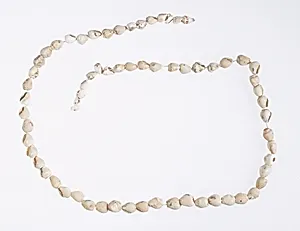
Hepy, String of periwinkle shells
Unknown Artist
ca. 1950–1885 B.C.
Medium
Shell (Marine), Nacre, Pearl
Dimensions
l. 68 cm (26 3/4 in)
Classification
Periwinkle shells
Period
Middle Kingdom
Department
Egyptian Art
Museum
Metropolitan Museum of Art, New York, NY
Credit
Rogers Fund, 1934
Accession Number
34.1.143
Rights
Public Domain
Art Historical Context
This exquisite string of periwinkle shells, dating to Egypt’s Middle Kingdom (Dynasty 12, ca. 1950–1885 B.C.), offers a glimpse into the refined tastes of ancient Egyptian elites. Likely worn as a necklace or ceremonial adornment, the 68-centimeter strand reflects the period’s renewed emphasis on personal ornamentation following the reunification of Egypt. Such pieces often accompanied their owners into the afterlife, symbolizing beauty, status, and perhaps protection through their association with the sea’s mysteries. Crafted from marine periwinkle shells interspersed with nacre and pearl, the work highlights the Egyptians’ skill in transforming natural materials into luminous jewelry. The iridescent qualities of nacre and pearl would have caught the light beautifully, creating a shimmering effect prized in both daily wear and funerary contexts. Marine shells were valued imports, suggesting connections to trade routes along the Red Sea or Mediterranean. Known as “Hepy,” the piece may bear the name of its original owner or donor, adding a personal dimension to this elegant artifact now preserved in the Metropolitan Museum’s Egyptian collection.