
Hercules and Omphale
ca. 1509
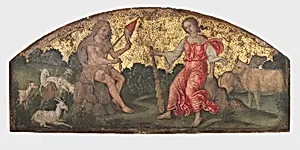
Medium
Fresco, transferred to canvas and attached to wood panels
Dimensions
Overall: 17 1/4 × 39 in. (43.8 × 99.1 cm)
Classification
Paintings-Decorative
Culture
Italian, Umbria
Department
European Sculpture and Decorative Arts
Museum
Metropolitan Museum of Art, New York, NY
Credit
Rogers Fund, 1914
Accession Number
14.114.17
Rights
Public Domain
Tags
Art Historical Context
In the vibrant fresco *Hercules and Omale* (ca. 1509), Umbrian Renaissance master Pinturicchio captures a whimsical yet poignant moment from classical mythology. The mighty hero Hercules, punished for his crimes by serving Queen Omphale of Lydia exchanges his club for a distaff, spinning wool alongside her maidens amid a pastoral scene of cows, rams, and sheep. This of gender roles—Hercules in women's attire while Omphale his lion skin—highlights themes of humility, redemption, and the blurring of heroic masculinity, popular in Renaissance decorative arts. Pinturicchio, renowned for his intricate Vatican frescoes like those in the Borgia Apartments, employs his signature luminous colors, delicate landscapes, and lively figures in this work, originally a wall fresco later transferred to canvas and mounted on wood panels (17¼ × 39 in.). This technique preserved the fresco's fresco's fresh, atmospheric quality, making it ideal for *spalliera* panels—decorative backboards for beds or chests in Italian palazzos, often gracing wedding chambers with moral tales. Acquired by the Metropolitan Museum of Art in 1914 via the Rogers Fund, this piece exemplifies Umbrian Renaissance elegance, blending classical antiquity with early 16th-century opulence. Visitors will delight in its narrative charm and Pinturicchio’s masterful depiction of everyday pastoral life intertwined with legend.