
Hercules and the Erymanthian boar
Late 17th or 18th century
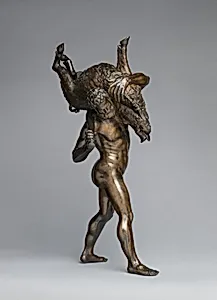
Medium
Bronze, with red-brown lacquer patina
Dimensions
Height: 17 1/2 in. (44.5 cm)
Classification
Sculpture-Bronze
Culture
Italian, probably Florence
Department
European Sculpture and Decorative Arts
Museum
Metropolitan Museum of Art, New York, NY
Credit
The Jack and Belle Linsky Collection, 1982
Accession Number
1982.60.100
Rights
Public Domain
Tags
Art Historical Context
Behold the dynamic bronze sculpture *Hercules and the Erythian Boar*, a captivating depiction of the Greek hero's third labor, where he wrestles the ferocious beast alive as penance for his crimes. Attributed to the renowned Mannerist master Giambologna (1529–1608), this late 17th- or 18th-century hails from Florence, Italy, the epicenter of Renaissance bronze artistry under Medici patronage. Standing at 17½ inches, its slender form captures Hercules in a triumphant moment of strain and power, the boar twisting desperately beneath him—a testament to Giambologna's signature swirling compositions designed for viewing from all angles. Crafted in bronze with a rich red-brown lacquer patina, the work exemplifies the technical virtuosity of Florentine foundries, where small-scale reductions like this served as luxurious tabletop ornaments for elite collectors. Giambologna's innovative techniques, including lost-wax casting, allowed for intricate detailing and fluid motion, influencing Baroque sculptors for generations. This piece, from The Jack and Belle Linsky Collection at The Metropolitan Museum of Art, reflects the enduring cultural fascination with Herculean myths, symbolizing human triumph over chaos in an age of grand humanistic ideals. Wander closer in the European Sculpture and Decorative Arts galleries, and you'll feel the tension frozen in metal—a perfect blend of myth, mastery, and Medici splendor.
About the Artist
Giambologna · 1529–1608
Born and trained in Flanders (Douai, his birthplace, is now in France but was once in Flanders), Giambologna traveled to Italy in 1550 to study Classical and Renaissance sculpture. There, he became court sculptor of the Medici Dukes. He was famed for compositional sophistication, sensuous, tactile treatment of human body, and sheer technical virtuosity. He was extremely influential because the Med...