
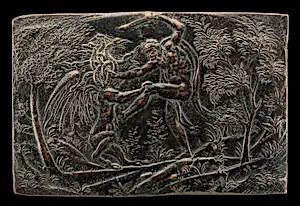
Hercules and the Hydra
c. 1570/1587
Medium
bronze
Dimensions
overall: 9.1 x 13.6 cm (3 9/16 x 5 3/8 in.)
Classification
Sculpture
Department
CSD
Museum
National Gallery of Art, Washington, D.C.
Credit
Gift of Lisa and Leonard Baskin
Accession Number
1999.109.11
Rights
Public Domain
Art Historical Context
**Hercules and the Hydra by Annibale Fontana created around 1570–1587, captures one of the most dramatic labors of the Greek hero Hercules. In this small bronze sculpture, measuring just 9.1 x 13.6 cm, Hercules battles the monstrous multi-headed Hydra, a mythical beast that regenerated heads when severed. Fontana, a Milanese sculptor and medalist active in the late Renaissance, drew from classical mythology to showcase heroic prowess, a popular theme among collectors of the era. Crafted in bronze—a favored medium for its durability and ability to hold intricate details—this plaquette exemplifies Fontana's mastery of lost-wax casting techniques. The compact scale suggests it was designed for intimate appreciation, perhaps as a collector's item or tabletop ornament, reflecting the Renaissance fascination with antiquity and virtuoso craftsmanship. Northern Italian artists like Fontana blended Mannerist elegance with dynamic action, making mythological scenes accessible yet sophisticated. Today, this gift to the National Gallery of Art highlights the cultural revival of Herculean tales, symbolizing triumph over chaos. Visitors can marvel at how such a tiny work packs epic energy, inviting reflection on human resilience through art.
About the Artist
Annibale Fontana · 1540–1587
Comment on works: sculptor; medalist