
Hercules en Omphale
1523 - 1527
Medium
paper
Dimensions
170; 257
Rights
Public Domain
About this artwork
verzamelaarsmerk, verso midden onder, gestempeld: Lugt 2228a
Art Historical Context
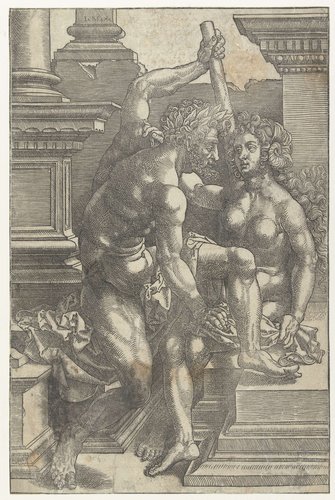
**Hercules en Omphale** is a delicate drawing by Jan Gossart (c. 1458–1532), a pioneering Flemish artist of the Northern Renaissance, created between 1523 and 1527. Gossart, also known as Mabuse, gained fame for blending Italian Renaissance ideals with Northern precision after his transformative trip to Rome around 1508–09. This work captures the mythological tale of Hercules, the mighty hero humbled in service to Queen Omphale of Lydia. In the ancient story, Hercules dons women's attire and spins wool as penance, while Omphale parades in his lion skin—a clever reversal of power that Gossart renders with his signature elegance and anatomical grace. Measuring just 257 × 170 mm on paper, this intimate piece exemplifies Gossart's mastery of preparatory drawings, likely a study for a larger painting or print. His style fuses classical mythology with meticulous line work and subtle modeling, bridging Gothic traditions and emerging Mannerism in the Low Countries. Such works were prized by collectors for their refinement, as evidenced by the verso collector's mark (Lugt 2228a), linking it to esteemed 19th- or 20th-century provenance, possibly from Dutch institutions like Rotterdam's Boijmans Van Beuningen Museum. This drawing invites us to ponder themes of vulnerability and role reversal, reflecting Renaissance humanism's fascination with antiquity. Gossart's innovation helped elevate Flemish art on the European stage, making **Hercules en Omphale** a gem for admirers of early modern draftsmanship.