
BK-15037
c. 1850
Medium
engine turning
Dimensions
5.8; 1.8; 4.3; 4.3
Rights
Public Domain
About this artwork
diameter 4.3 cm x height 5.8 cm x width 4.3 cm x depth 1.8 cm
Art Historical Context
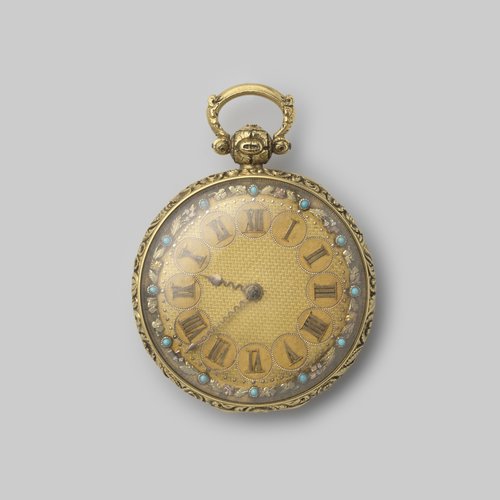
**BK-15037 by Benjamin Lautier (c. 1850)** This delicate object, crafted by Benjamin Lautier around 1850, exemplifies the precision of *engine turning*—a mechanical engraving technique using a rose enginehe to produce intricate, guilloché patterns on metal surfaces. Measuring just 4.3 cm in diameter, 5.8 cm high, 4.3 cm wide, and 1.8 cm deep, it is a compact luxury item, likely a small étui (needle case), snuff box, or vinaigrette popular among 19th-century gentlemen and ladies. Lautier's mastery of this method created mesmerizing, light-reflecting designs that elevated everyday accessories into works of art. In the mid-19th century, during France's Second Empire and Britain's Victorian era, engine turning reached its zenith as a hallmark of high-end decorative arts. Artisans like Lautier, a specialist in this labor-intensive process, supplied jewelers and silversmiths, blending industrial innovation with artisanal finesse. These patterns not only beautified objects but also deterred counterfeiting due to their complexity. Today, BK-15037 offers a glimpse into an era when such miniature marvels symbolized refined taste and technical prowess, bridging craftsmanship and emerging machinery.