
Hexagonal Bottle
Unknown Artist
ca. 1850
Medium
Pottery (Hizen ware, Kutani type)
Dimensions
H. 6 5/8 in. (16.8 cm)
Classification
Ceramics
Culture & Period
Japan · Edo period (1615–1868)
Department
Asian Art
Museum
Metropolitan Museum of Art, New York, NY
Credit
Edward C. Moore Collection, Bequest of Edward C. Moore, 1891
Accession Number
91.1.209
Rights
Public Domain
Tags
Art Historical Context
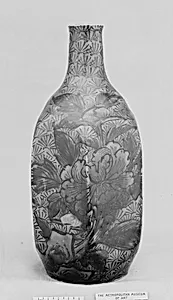
This delicate hexagonal bottle, crafted around 1850 during Japan's Edo period (1615–8), exemplifies the refined artistry of Hizen ware pottery in the vibrant Kutani style. Standing just 6⅝ inches (16.8 cm) tall, its faceted form and intricate decorations of flowers and leaves showcase the period's mastery of ceramics. Produced in the Hizen region of Kyushu (famous for Arita kilns), this piece features bold, polychrome overglaze enamels typical of Kutani-type wares—vibrant hues of red, green, and gold applied after firing to create enduring, jewel-like motifs. Hizen ware rose to prominence in the 17th century, blending local porcelain techniques with imported Chinese influences, and became a staple for export through Nagasaki. The Kutani style, known for its exuberant floral designs symbolizing nature's abundance, reflects Edo Japan's cultural emphasis on harmony with the seasons and wabi-sabi aesthetics. Though made by an unknown artisan, such bottles often served practical yet elegant roles in tea ceremonies or as sake containers, bridging utility and beauty. Acquired through the Edward C. Moore Collection and now housed in the Metropolitan Museum of Art's Asian Art department, this bottle invites us to appreciate the anonymous genius of Edo potters, whose innovations continue to inspire global collectors.