
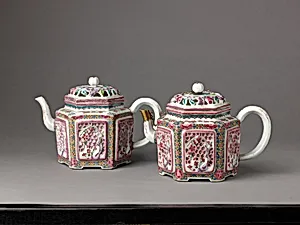
Hexagonal wine pot or teapot
late 18th century
Medium
Porcelain with reticulated ornamentation, painted in overglaze famille rose enamels.
Dimensions
Height with lid 4 15/16 in. (12.7 cm.)
Classification
Ceramics
Culture
Chinese
Department
Robert Lehman Collection
Museum
Metropolitan Museum of Art, New York, NY
Credit
Robert Lehman Collection, 1975
Accession Number
1975.1.1706
Rights
Public Domain
Tags
Art Historical Context
This delicate hexagonal wine pot or teapot, crafted in late 18th-century China, exemplifies the pinnacle of Qing dynasty porcelain artistry. Standing just under 5 inches tall with its lid, the piece features intricately reticulated ornamentation—finely pierced latticework that creates an airy, openwork effect—paired with vibrant overglaze famille roseels. These enamels fired at low temperatures after the initial glazing, produce the signature soft pinks, greens, and floral motifs that bloom across its surfaces, evoking the elegance of imperial workshops. Famille rose, introduced earlier in the century, became a hallmark of export and domestic porcelain during this period, blending European influences with Chinese ingenuity for luminous, multi-hued decoration. The hexagonal form and floral designs reflect the era's fascination with nature's harmony, often symbolizing prosperity and refinement in elite households. Reticulated techniques demanded exceptional skill to prevent fragility while enhancing light play, making such vessels prized collector's items. Now housed in the Metropolitan Museum of Art's Robert Lehman Collection, this teapot invites us to appreciate the fusion of utility and opulence in Chinese ceramics, a testament to the enduring allure of Qing craftsmanship.
About the Artist
Chinese
The artist known simply as "Chinese" in museum records represents the vast tradition of anonymous or unattributed masters in Chinese art history, with 99 works preserved in our collection. These pieces exemplify the enduring legacy of guó huà, or traditional Chinese painting, one of the world's oldest continuous artistic practices. Early life is not well documented, as is common for many practitio...