
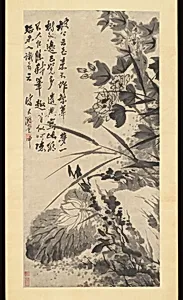
清 石濤 (朱若極) 花石圖 軸|Hibiscus, Lotus, and Rock
ca. 1705–7
Medium
Hanging scroll; ink on paper
Dimensions
Image: 45 9/16 in. × 22 in. (115.7 × 55.9 cm) Overall with mounting: 88 in. × 28 1/2 in. (223.5 × 72.4 cm) Overall with knobs: 88 in. × 31 3/4 in. (223.5 × 80.6 cm)
Classification
Paintings
Culture & Period
China · Qing dynasty (1644–1911)
Department
Asian Art
Museum
Metropolitan Museum of Art, New York, NY
Credit
Gift of Mr. and Mrs. David M. Levitt, by exchange, 1978
Accession Number
1978.254
Rights
Public Domain
Tags
Art Historical Context
Created around 1705–1707 during the Qing dynasty, this hanging scroll by Shitao (also known as Zhu Ruoji) captures a quiet yet dynamic arrangement of hibiscus, lotus, and rock rendered in ink on paper. Shitao, a former Ming royal who became a Buddhist monk and itinerant artist, was one of the most inventive painters of his era. His late works often reflect a lifetime of travel and contemplation, distilling natural forms into expressive, almost calligraphic brushstrokes. As a hanging scroll, the format invites viewers to experience the composition gradually from top to bottom, a traditional format that heightens the sense of vertical space and seasonal atmosphere. The lotus, long associated with purity in Chinese culture, and the sturdy rock suggest themes of resilience and harmony with nature—motifs Shitao explored with remarkable freedom. Today in the Metropolitan Museum’s collection, the painting exemplifies the “Individualist” spirit of early Qing art, where personal vision took precedence over academic rules. Its spare yet lively inkwork continues to reward close looking, revealing Shitao’s mastery of suggestion and movement.