
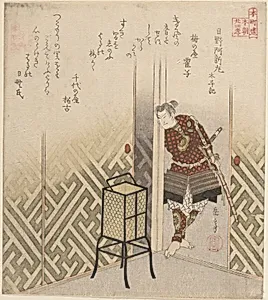
Hino Kumawakamaru (Warrior) From the Book: Taiheiki
ca. 1840
Medium
Woodblock print (surimono); ink and color on paper
Dimensions
8 1/4 x 7 1/4 in. (21 x 18.4 cm)
Classification
Prints
Culture & Period
Japan · Edo period (1615–1868)
Department
Asian Art
Museum
Metropolitan Museum of Art, New York, NY
Credit
The Howard Mansfield Collection, Purchase, Rogers Fund, 1936
Accession Number
JP2427
Rights
Public Domain
Tags
Art Historical Context
Behold *Hino Kumawakamar (Warrior)*, a captivating woodblock print (surono) by Yashimaakutei, created 1840 during Japan's Edo period (1615–1868). This intimate 8¼ × 7¼-inch work from the epic tale *Taiheiki* portrays the legendary samurai Hino Kumawakamar, a symbol of unyielding loyalty amid the turbulent 14th-century Nanboku-chō wars. Gakutei, a master surimono—privately commissioned prints often gifted for New Year's or celebrations—infuses the scene with dynamic energy, highlighting the warrior's fierce stance and sword, evoking the valor of bushido. Surimono like this one elevated woodblock printing beyond mass-produced ukiyo-e, employing luxurious techniques such as fine carving, vibrant inks, and subtle colors on paper for poetic elegance and refined detail. In Edo-era Japan, such prints celebrated historical heroes from tales like *Taiheiki*, blending education with artistry amid a booming urban culture. This piece, from The Howard Mansfield Collection at The Metropolitan Museum of Art, exemplifies how warriors were romanticized in print, inspiring admiration for their tragic heroism. (198 words)
About the Artist
Yashima Gakutei · 1786–1868
Yashima Gakutei (c. 1786–1868), born in Osaka as the illegitimate son of a Tokugawa shogunate samurai named Hirata, adopted the name from his mother's subsequent marriage into the Yashima clan. Little is documented about his early years beyond these familial ties, but he pursued artistic training under the esteemed ukiyo-e masters Totoya Hokkei and Katsushika Hokusai, absorbing their precision in ...