
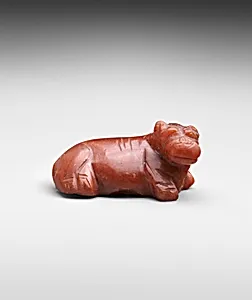
Hippopotamus
Unknown Artist
ca. 1550–1070 B.C.
Medium
Red jasper
Dimensions
L. 2.5 × W. 1.5 × H. 1.3 cm (1 × 9/16 × 1/2 in.)
Classification
Figurine, hippopotamus
Period
New Kingdom
Department
Egyptian Art
Museum
Metropolitan Museum of Art, New York, NY
Credit
Gift of Helen Miller Gould, 1910
Accession Number
10.130.2429
Rights
Public Domain
Tags
Art Historical Context
This diminutive Hippopotamus, carved from vibrant red jasper during Egypt's New Kingdom (ca 1550–1070 B.C.), captures the formidable presence of the Nile's most iconic creature in a mere 2.5 cm long. Crafted by an unknown artist, this tiny sculpture exemplifies the exquisite stone-carving techniques of ancient Egyptian artisans, who transformed hard semi-precious stones likeasper—valued for its protective qualities and rich color—into intimate talismans. Its compact form suggests it was worn as an amulet or used in personal devotion, fitting neatly into the palm or on a chain. In New Kingdom Egypt, the era of pharaohs like Ramses II and grand temple-building, hippos held profound cultural symbolism. Revered and feared for their power in the Nile's waters, they evoked fertility, rebirth, and protection against evil—qualities amplified by red jasper's association with vitality and warding off danger. Such figurines were common in daily life, buried with the dead or carried for safeguarding, blending everyday utility with deep spiritual meaning. Today, this gift to the Metropolitan Museum of Art in 1910 offers visitors a window into ancient Egyptians' harmonious bond with nature, where even a small hippo could embody the river's life-giving force. Marvel at its polished details, a testament to craftsmanship that endures millennia.