
History of Kamakura
19th century
Medium
Woodblock print (surimono); ink and color on paper
Dimensions
8 1/4 x 7 1/4 in. (21 x 18.4 cm)
Classification
Prints
Culture & Period
Japan · Edo period (1615–1868)
Department
Asian Art
Museum
Metropolitan Museum of Art, New York, NY
Credit
H. O. Havemeyer Collection, Bequest of Mrs. H. O. Havemeyer, 1929
Accession Number
JP2021
Rights
Public Domain
Tags
Art Historical Context
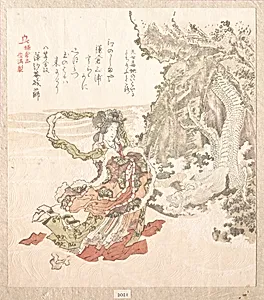
Kubo Shunman's *History of Kamakura* a exquisite example of surimono, a deluxe form of Japanese woodblock printing from the Edo period (161–1868). Created the 19th century this intimate print measures just 8¼ x 7¼ inches, designed for private commissioning among poetry circles or for New Year's greetings. Shunman, a versatile ukiyo-e artist for his poetic and refined style, masterfully blends ink and vibrant colors on paper to evoke the storied past of Kamakura—a pivotal city in medieval Japan, site of the first shogunate and samurai culture. The composition features women and dragons, symbols rich in Japanese lore, likely alluding to legendary tales or historical figures from Kamakura's era (1185–1333). Surimono like this one stand out for their superior craftsmanship: crisp lines from multiple woodblocks, subtle gradations of color (bokashi), and often luxurious embellishments like mica or embossing, making them prized collector's items over mass-produced ukiyo-e. Housed in the Metropolitan Museum of Art's Asian Art department as part of the H. O. Havemeyer Collection (1929 bequest), this print offers a window into Edo Japan's fascination with history and mythology. It reminds us how art bridged elite literary traditions with visual storytelling, captivating viewers with its delicate beauty and cultural depth.
About the Artist
Kubo Shunman · 1757–1820
Japanese, 1757–1820