
Hogarth's Shop Card
Medium
Etching and engraving
Dimensions
plate: 3 7/8 x 5 in. (9.9 x 12.7 cm) sheet: 5 1/4 x 6 5/8 in. (13.4 x 16.9 cm)
Classification
Prints
Department
Drawings and Prints
Museum
Metropolitan Museum of Art, New York, NY
Credit
Harris Brisbane Dick Fund, 1917
Accession Number
17.3.1474
Rights
Public Domain
Tags
About this artwork
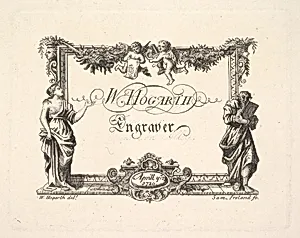
Samuel Ireland, working in the 1790s, created this etching and engraving reproducing William Hogarth's original shop card design from the 1720s. Measuring 3⅞ by 5 inches (plate), the print exemplifies the 18th-century tradition of decorative trade cards that served both advertising and artistic purposes. Hogarth (1697-1764), England's greatest satirical artist, designed his shop card when establishing himself as an independent engraver and print seller. Shop cards combined practical information—...
Art Historical Context
This charming etching and engraving captures a delightful glimpse into the commercial world of Georgian England. Created in the 1790s by Samuel Ireland, the print reproduces William Hogarth’s original shop card from the 1720s, when the young artist was establishing himself as an independent engr and print seller. Hogarth, later celebrated as England’s greatest satirical artist, used such trade cards to advertise his skills while blending practical details like his name and location with playful artistic embellishments, including figures of men, women, and putti. Ireland’s reproduction reflects the late-18th-century enthusiasm for Hogarth’s work, as collectors eagerly sought out his designs. As a print seller and author, Ireland helped preserve these early examples of commercial graphic design, which combined advertising with fine craftsmanship. The original card exemplifies how artists in the 1720s elevated everyday business tools into works of art. Executed in etching and engraving—a technique prized for its crisp lines and delicate shading—the small print (just under four by five inches) highlights the intimate scale of these trade cards. It beautifully illustrates the lively connections between art and commerce in 18th-century London, showing how Hogarth’s wit and skill infused even the humblest printed matter with lasting charm.