
Hôjô Yasutoki - Azuma kagami
c. 1821
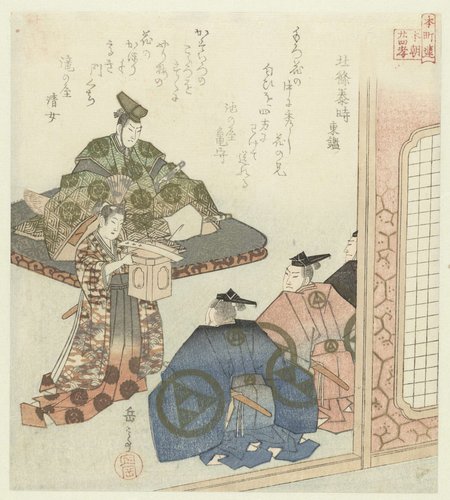
Medium
nishikie, with blindprinting
Dimensions
204; 182
Rights
Public Domain
About this artwork
Een surimono is een luxe uitgevoerde prent waarop beeld met één of meerdere gedichten gecombineerd is. Bij het drukken van een surimono werd vaak gebruik gemaakt van dikker papier, blinddruk en metaal pigmenten, zoals koper- en zilverpoeder. De prenten werden vaak in opdracht van dichters gemaakt en als exclusief geschenk aan vrienden en relaties gegeven.
Art Historical Context
Discover the exquisite *Hôjô Yasutoki - Azuma kag*, a circa 1821 surimono by Yashimaakutei, a master of ukiyo-e woodblock. This compact nishikie (brocade print), measuring just 204mm high by 182mm wide, portrays Hôjô Yasutoki, the influential Kamakura shogunate regent chronicled in the *Az Kagami* ("Mirror of the Eastern Provinces"), Japan's earliest historical record of that era. Gakutei's delicate style captures the subject's dignified presence, blending portraiture with poetic elegance typical of the Edo-period artist. Surimono like this were luxury editions, far from mass-produced ukiyo-e. Printed on thicker paper with sophisticated techniques—nishikie for vibrant, multicolored layers; blindprinting (gauffrage) for subtle embossed textures; and metallic pigments like copper or silver powders—they shimmered with opulence. Often commissioned by poets, these prints merged imagery with kyôka (witty verses), serving as exclusive New Year's gifts among literary circles. In Japanese culture, surimono embodied refined connoisseurship, fostering intimate bonds through art and poetry. Gakutei's work exemplifies this tradition, inviting us to appreciate not just historical figures, but the artistry of ephemeral beauty preserved for posterity.
About the Artist
Yashima Gakutei · 1786–1868
Yashima Gakutei (c. 1786–1868), born in Osaka as the illegitimate son of a Tokugawa shogunate samurai named Hirata, adopted the name from his mother's subsequent marriage into the Yashima clan. Little is documented about his early years beyond these familial ties, but he pursued artistic training under the esteemed ukiyo-e masters Totoya Hokkei and Katsushika Hokusai, absorbing their precision in ...