
Hol
Unknown Artist
late 19th century
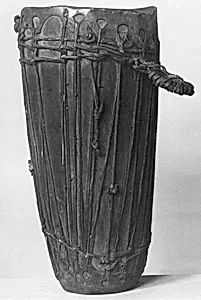
Medium
Wood, skin, cord
Dimensions
H. 58.4 cm (23 in.)Diam. 30.5 cm (12 in.)
Classification
Membranophone-double-headed / conical drum
Culture
Indian (possibly Munda people)
Department
Musical Instruments
Museum
Metropolitan Museum of Art, New York, NY
Credit
The Crosby Brown Collection of Musical Instruments, 1889
Accession Number
89.4.149
Rights
Public Domain
Art Historical Context
Nestled in the Metropolitan Museum of Art's Musical Instruments department, the "Hol" is a captivating conical drum from late 19th-century India, possibly crafted by the Munda people, an indigenous group from eastern India. Standing at 58.4 cm tall with a 30.5 cm diameter, this-headed membranophone exemplifies traditional construction using wood for the resonant body, animal skin stretched taut over both ends, and cord for lashing and tensioning. These materials not only ensure durability but also produce rich, varied tones when struck, making it ideal for communal performances. As a membranophone, the "Hol" vibrates its skins to create sound, a technique central to Indian tribal music traditions. Drums like this held profound cultural importance among groups such as the Munda, often accompanying rituals, dances, and festivals that reinforced social bonds and spiritual practices. Its conical shape allows for distinct pitches from each head, showcasing ingenious acoustic design honed over generations. Acquired as part of The Crosby Brown Collection of Musical Instruments in 1889, the "Hol" offers a window into colonial-era ethnographic collecting, preserving a slice of India's sonic heritage for modern audiences. Visitors can imagine its rhythmic pulse echoing through village gatherings, inviting us to appreciate the artistry in everyday cultural tools.