
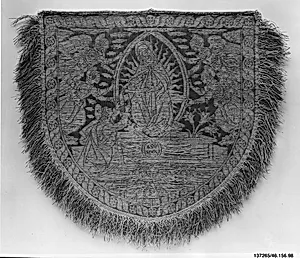
Hood for a cope
Unknown Artist
late 15th–early 16th century
Medium
Silk, linen and metal thread
Dimensions
Without fringe: H. 16 x W. 16 1/2 inches (40.6 x 41.9 cm)
Classification
Textiles-Woven|Textiles-Ecclesiastical
Culture
Italian, Florence
Department
European Sculpture and Decorative Arts
Museum
Metropolitan Museum of Art, New York, NY
Credit
Fletcher Fund, 1946
Accession Number
46.156.98
Rights
Public Domain
Tags
Art Historical Context
This exquisite *Hood for a Cope crafted in Florence during the late 15th early 16th century, served as the ornamental hood for a cope—a semicircular liturgical cloak worn by clergy during religious ceremonies. Produced in an era when Renaissance Florence was a hub of artistic innovation and piety, this square panel (16 x 16½ inches without fringe) reflects the city's mastery of luxurious textiles for ecclesiastical use. Woven from silk and linen with shimmering metal threads, it likely features intricate motifs of angels and the Virgin Mary, symbols of divine protection and intercession central to Catholic devotion. The use of opulent materials like metal threads—often gold or silver—highlights advanced weaving and embroidery techniques of the Italian Renaissance, where textiles rivaled painting in prestige. These "opus florentinum" or Florentine-style cloths were prized for their metallic sheen, evoking heavenly radiance under candlelit altars. As a piece of ecclesiastical art, it underscores the period's fusion of artistry and faith, commissioned for cathedrals or grand processions. Today, housed in The Metropolitan Museum of Art's European Sculpture and Decorative Arts Department (acquired via the Fletcher Fund in 1946), this hood offers a tactile glimpse into Renaissance spirituality, reminding us how Florence's weavers wove threads of silk and sanctity into wearable masterpieces.