
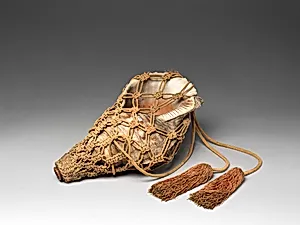
Horagai or Rappakai
Unknown Artist
19th century
Medium
Shell; triton, tritonis.
Dimensions
Height:: 38.1 cm (15 in.); Width: 15.2 cm ( 6 in.)
Classification
Aerophone-Lip Vibrated-trumpet / trombone
Culture
Japanese
Department
Musical Instruments
Museum
Metropolitan Museum of Art, New York, NY
Credit
The Crosby Brown Collection of Musical Instruments, 1889
Accession Number
89.4.93
Rights
Public Domain
Art Historical Context
Nestled in the Metropolitan Museum of Art's Crosby Brown Collection of Musical Instruments the *Horagai or Rapp* is a striking 19th-century Japaneseophone crafted from the majestic shell of a triton (*Charonia tritonis*). Measuring 38.1 cm in height and 15.2 cm in width, lip-vibrated trumpet exemplifies the ingenuity of natural materials in traditional craftsmanship. The shell's natural spiral form is meticulously modified—typically by cutting the apex and adding a mouthpiece—to produce resonant tones, blending organic beauty with functional design. In Japanese culture, the horagai served as a powerful signaling instrument, used by yamabushi mountain ascetics, samurai warriors, and in festivals or rituals. Its deep, booming calls could echo across valleys, conveying commands, warnings, or spiritual invocations, underscoring its role beyond mere music into communication and ceremony. This example highlights the 19th-century fusion of utility and artistry in East Asian aerophones. As part of the Met's renowned collection, the *Horagai* invites visitors to appreciate how everyday marine treasures were transformed into cultural icons, bridging the natural world with human expression. Listen closely—its voice still whispers tales of ancient Japan.