
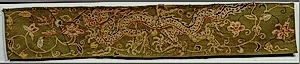
Horizontal Panel with Profile Dragon amid Flowers
Unknown Artist
17th–18th century
Medium
Silk and metallic thread embroidery on plain-weave silk
Dimensions
Overall (with top border released): 3 3/4 x 20 in. (9.5 x 50.8 cm) Mount: 8 1/2 x 25 in. (21.6 x 63.5 cm)
Classification
Textiles-Embroidered
Culture & Period
China · Ming dynasty (1368–1644), Wanli period (1573–1620)
Department
Asian Art
Museum
Metropolitan Museum of Art, New York, NY
Credit
Purchase, Rogers Fund and The B. D. G. Leviton Foundation Gift, 1988
Accession Number
1988.151
Rights
Public Domain
Tags
Art Historical Context
This exquisite *Horizontal Panel with Profile Dragon amid Flowers* a masterful example of Chinese embroidery from the late Ming dynasty's Wanli period (157–1620), though dated to the 17th–18th century. Crafted an unknown artist using silk shimmering metallic threads on plain-weave silk, the panel measures just 3¾ x 20 inches, for adorning a screen, robe border, or decorative mount. Its horizontal format highlights a majestic profile dragon weaving gracefully among blooming flowers and lush leaves, capturing the intricate beauty of imperial-era textiles. In Chinese culture, dragons symbolized imperial power, good fortune, and the emperor's divine authority, while flowers evoked prosperity and harmony with nature. During the Wanli reign, known for artistic opulence amid economic prosperity, such embroideries showcased elite craftsmanship. The use of metallic threads added a luxurious, reflective glow, elevating the piece from everyday decor to a status symbol—likely intended for a scholarly or noble household. The Metropolitan Museum of Art's acquisition underscores its rarity; Ming textiles like this represent peak technical skill in satin stitch and couching, where threads are meticulously layered for depth and texture. Visitors, imagine this dragon "breathing" life into a quiet alcove, a testament to China's enduring textile legacy.