
唐 褐黑釉陶馬|Horse
Unknown Artist
7th–8th century
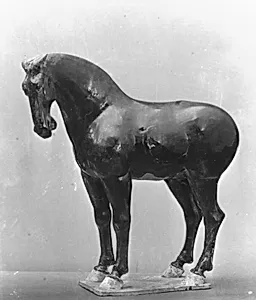
Medium
Earthenware with brown-black glaze
Dimensions
H. 21 in. (53.3 cm); L. 23 in. (58.4 cm)
Classification
Tomb Pottery
Culture & Period
China · Tang dynasty (618–907)
Department
Asian Art
Museum
Metropolitan Museum of Art, New York, NY
Credit
Gift of Mrs. Edward S. Harkness, 1926
Accession Number
26.203.1
Rights
Public Domain
Tags
Art Historical Context
Step into the vibrant world of Tang dynasty China (618–907) with striking earthenware horse, a masterpiece of tomb pottery known as *mingqi*. Crafted by an unknown artist in the th–8th century this dynamic steed stands 21 inches tall and 23 inches long, brown-black glaze lending a rich, earthy sheen that evokes the power of the era's prized cavalry mounts. Horses were symbols of status and mobility, imported via the Silk Road and celebrated in art for their role in military prowess and imperial hunts. As tomb figurines, these vessels were placed in burials to accompany the deceased into the afterlife, providing transportation and companionship in the spiritual realm—a testament to Tang beliefs in immortality and continuity. The brown-black glaze, achieved through high-fired earthenware techniques with iron-rich slips, was a hallmark innovation, creating subtle metallic highlights that mimic real horsehide under sunlight. This generous gift to the Metropolitan Museum of Art from Mrs. Edward S. Harkness in 1926 invites us to ponder the Tang's golden age of cosmopolitanism and craftsmanship, where everyday objects transcended mortality to capture eternal vitality.