
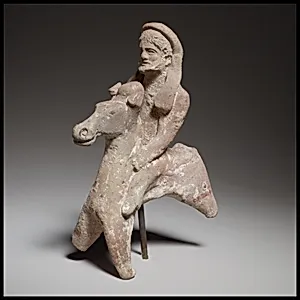
Horse and rider
Unknown Artist
early 4th century BCE
Medium
Terracotta
Dimensions
H. 6 1/16 in. (15.4 cm)
Classification
Terracottas
Culture & Period
Cypriot · Cypro-Classical II
Department
Greek and Roman Art
Museum
Metropolitan Museum of Art, New York, NY
Credit
The Cesnola Collection, Purchased by subscription, 1874–76
Accession Number
74.51.1785
Rights
Public Domain
Tags
Art Historical Context
This delightful terracotta figurine, *Horse and Rider*, hails from ancient Cyprus during the Cypro-Classical II period in the early 4th BCE. Standing at a modest 6 1/16 inches (15.4 cm) high, it depicts a man mounted on horseback—a common motif symbolizing status, mobility, or perhaps equestrian prowess in a culture where horses held prestige. Crafted by an unknown artist, the small scale suggests it was likely a votive offering a sanctuary, a widespread practice in Cypriot religious life blending local traditions with emerging Greek influences. Terracotta, fired clay, was an ideal medium for such accessible sculptures, allowing for intricate details like the rider's posture and the horse's dynamic stance despite its fragility. These figurines illuminate Cyprus's vibrant Cypro-Classical era, a time of political fragmentation and cultural exchange on the island, bridging Near Eastern and Mediterranean worlds. Part of the renowned Cesnola Collection—acquired by subscription for the Metropolitan Museum of Art between 1874–76—this piece exemplifies the Met's deep holdings in Greek and Roman Art, offering a tangible glimpse into everyday devotion and artistry over 2,400 years ago.