
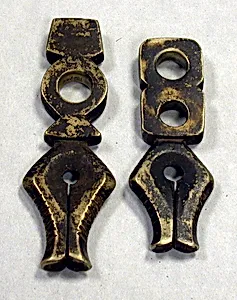
Horse Bridle Ornament (Katanga Njara)
Unknown Artist
19th century or earlier
Medium
Silver or bronze
Dimensions
Length 4-1/2 in.
Classification
Metal-Implements
Culture
Sumba Island
Department
Arts of Africa, Oceania, and the Americas
Museum
Metropolitan Museum of Art, New York, NY
Credit
Gift of Anita E. Spertus and Robert J. Holmgren, in honor of Douglas Newton, 1990
Accession Number
1990.335.8
Rights
Public Domain
Art Historical Context
This exquisite Horse Bridle Ornament, as *Katanga Njara*,ails from the vibrant culture of Sumba Island in, dating to the 19th century earlier. Crafted by an unknown artisan, this small yet striking piece—measuring just 4-1/2 inches in length—was designed to adorn the bridle of a horse, reflecting the island's deep-rooted equestrian traditions. On Sumba, horses hold symbolic importance, often linked to nobility, rituals, and status displays during ceremonies, making such ornaments more than functional—they were emblems of prestige and cultural identity. Forged from silver or bronze, the ornament exemplifies masterful metalworking techniques prevalent in Oceanic arts. These materials, valued for their durability and luster, were meticulously shaped, likely through casting or hammering, to create intricate forms that caught the light and eye during processions. As a metal implement from the Arts of Africa, Oceania, and the Americas department at The Metropolitan Museum of Art, it highlights the sophistication of pre-colonial craftsmanship in remote island societies. Today, this gift from Anita E. Spertus and Robert J. Holmgren, honoring curator Douglas Newton (1990), invites us to appreciate how everyday objects like this bridle piece preserved Sumba's artistic heritage amid evolving traditions. A window into a world where utility met artistry.