
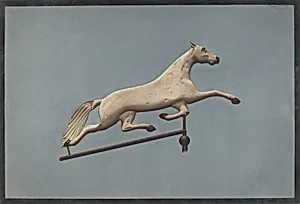
Horse Weather Vane
1935/1942
Medium
watercolor, graphite, and pen and ink on paperboard
Dimensions
overall: 38.1 x 55.9 cm (15 x 22 in.)
Classification
Index of American Design
Department
CG-W
Museum
National Gallery of Art, Washington, D.C.
Credit
Index of American Design
Accession Number
1943.8.16729
Rights
Public Domain
Art Historical Context
**Horse Weather Vane** by Henry Murphy captures the spirited elegance of a classic American folk art object through a meticulous rendering completed between 1935 and 1942. This watercolor, graphite, and pen-and-ink work on paperboard (38.1 x 55.9 cm) depicts a dynamic horse weather vane, a functional yet sculptural emblem common on New England barns and rooftops from the 18th and 19th centuries. These vanes, often crafted by local metalsmiths, served practical purposes while showcasing whimsical craftsmanship, with the horse symbolizing strength and speed in early American culture. As part of the *Index of American Design*, a groundbreaking WPA Federal Art Project from the Great Depression era, Murphy's piece preserves vanishing folk traditions through hyper-detailed documentation. Artists like him created over 15,000 such renderings nationwide, blending photographic accuracy with artistic flair to celebrate everyday American ingenuity. The mixed media—vibrant watercolors for texture and patina, precise graphite and ink for outlines—highlight the vane's hammered copper form, rivets, and wind-worn charm, making it a vital record of regional artistry. Today, housed in the National Gallery of Art, this work invites visitors to appreciate how ordinary objects embody cultural heritage, bridging utility and beauty in America's design story.
About the Artist
Henry Murphy · 1855–present
Henry Murphy is an artist whose biographical details — including his dates, nationality, and training — have not been firmly established in the accessible scholarly literature. The works associated with his name suggest a practicing artist engaged with the traditions of his era, though the specific character of his style, the medium in which he primarily worked, and the arc of his career remain di...