
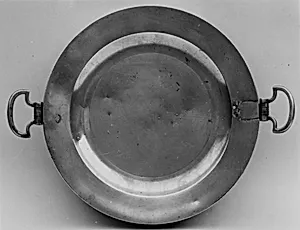
Hot Water Plate
1761–93
Medium
Pewter
Dimensions
H. 1 3/4 in. (4.4 cm); Diam. 9 7/16 in. (24 cm)
Classification
Hot water plate
Culture
American
Department
The American Wing
Museum
Metropolitan Museum of Art, New York, NY
Credit
Rogers Fund, 1946
Accession Number
46.27
Rights
Public Domain
Art Historical Context
Nestled in The Metropolitan Museum of Art's American Wing, *Hot Water Plate* by Henry Will exemplifies the refined craftsmanship of colonial American pewterers. Crafted between 1761 and 1793, this modest yet elegant piece measures 1¾ inches high 9⅜ inches in, fashioned from pewter—a durable, affordable alloy of tin, antimony, and copper prized for its silvery sheen and malleability. Will, a skilled New York pewterer, marked his work with distinctive touchmarks, reflecting the era's guild-like traditions among artisan makers. Pewter objects like this hot water plate were essential to 18th-century American households, serving practical purposes such as holding steaming water for tea rituals, shaving, or warming dishes at the table. During the Revolutionary period, domestic goods underscored growing colonial independence, as local craftsmen like Will supplied alternatives to pricier imported silver, blending European techniques with American ingenuity. Acquired through the Rogers Fund in 1946, this artifact highlights the cultural significance of everyday metalwork in early America. It invites us to appreciate the artistry in utilitarian design, where form met function in the bustling life of the young republic.