
Hotei
after 1704
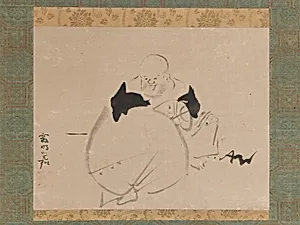
Medium
Hanging scroll; ink on paper
Dimensions
Image: 11 1/4 × 14 1/2 in. (28.5 × 36.8 cm) Overall with mounting: 41 3/4 × 19 9/16 in. (106 × 49.7 cm) Overall with knobs: 41 3/4 in. × 21 5/8 in. (106 × 54.9 cm)
Classification
Paintings
Culture & Period
Japan · Edo period (1615–1868)
Department
Asian Art
Museum
Metropolitan Museum of Art, New York, NY
Credit
Mary Griggs Burke Collection, Gift of the Mary and Jackson Burke Foundation, 2015
Accession Number
2015.300.89
Rights
Public Domain
Art Historical Context
Ogata Kōrin's *Hotei*, created after 1704 during Japan's Edo period (16151868), captures the joyful spirit of one of the Seven Gods in Japanese folklore. Hote, the rotund god of fortune and, is depicted as a, bald monk often shown with his sack of treasures, embodying abundance and laughter. Kōrin, a master the Rinpa school, his works with bold, decorative flair, drawing from classical Yamato-e traditions while embracing playful, asymmetrical compositions that celebrated nature and everyday delights. This hanging scroll in ink on paper exemplifies the intimate scale and refined brushwork of Edo-era painting. Measuring just 11¼ × 14½ inches, it was designed for selective display in a tokonoma alcove, a practice central to Japanese tea ceremonies and home aesthetics. The minimalist ink medium highlights Kōrin's mastery of fluid lines and subtle washes, evoking spontaneity amid the period's booming urban culture and merchant patronage. Housed in the Metropolitan Museum of Art's Mary Griggs Burke Collection, *Hotei* reflects Rinpa's enduring influence on Japanese art, blending spirituality with whimsy to bring good fortune to viewers even today.
About the Artist
Ogata Kōrin · 1658–1716
Noted as one of the most important Japanese artists of the 17th century; known for paintings of irises and other subjects. He was regarded, along with Sotatsu, as one of the masters of the Sotatsu-Koetsu school of decorative painting, including painted screens and textile designs. He was descended from a samurai who had served under the Ashikaga rulers.