
布袋図 (Hotei zu)|Hotei
probably 17th or 18th century
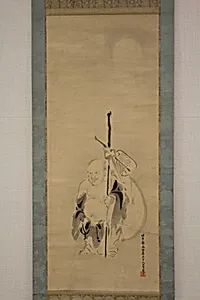
Medium
Hanging scroll; ink on paper
Dimensions
Image: 41 5/8 × 18 1/2 in. (105.7 × 47 cm) Overall with mounting: 81 × 23 7/16 in. (205.7 × 59.5 cm) Overall with knobs: 81 × 25 3/8 in. (205.7 × 64.5 cm)
Classification
Paintings
Culture & Period
Japan · Edo period (1615–1868)
Department
Asian Art
Museum
Metropolitan Museum of Art, New York, NY
Credit
The Howard Mansfield Collection, Purchase, Rogers Fund, 1936
Accession Number
36.100.81
Rights
Public Domain
Tags
Art Historical Context
In the serene world of Edo-period Japan (1615–1868), Kano Tan'yū a master of the Kano school, captured the joyful spirit of Hotei of the beloved Seven Lucky Gods—in this exquisite hanging scroll, *Hotei zu*. Rendered in ink on paper, the painting measures an impressive 41⅝ × 18½ inches, designed to unfurl dramatically in a tokonoma alcove for seasonal display or special occasions. Tanū (1602–1674), official painter to the Tokugawa shogunate, blended classical Chinese ink techniques with Japanese sensibility, using bold, fluid brushstrokes to evoke Hotei's rotund, laughing form, sack of treasures in hand, symbolizing abundance and contentment. The Kano school's dominance during the peaceful Edo era made it the pinnacle of decorative arts for samurai elites and temples, emphasizing dynamic compositions and subtle gradations of ink wash (suyage) for depth and vitality. Hotei, derived from the Chinese monk Budai, embodied folk prosperity and Zen mirth, resonating with everyday Japanese hopes amid urban flourishing. This work, from The Howard Mansfield Collection at The Metropolitan Museum of Art, exemplifies Tan'yū's versatility in portraiture, bridging scholarly tradition and popular devotion. Visitors, imagine this scroll gracing a shogun's chamber—its minimalist ink inviting contemplation of fortune's whimsy in a structured world.
About the Artist
Kano Tan'yū (Japanese) · 1602 –1674
Japanese, 1602–1674