
Hudson
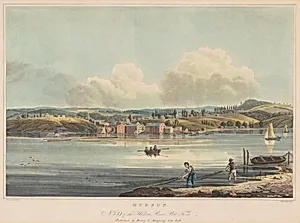
Medium
hand-colored engraving and aquatint on wove paper
Dimensions
image: 36.83 × 54.93 cm (14 1/2 × 21 5/8 in.) sheet: 45.72 × 63.34 cm (18 × 24 15/16 in.)
Classification
Department
CG-W
Museum
National Gallery of Art, Washington, D.C.
Credit
Corcoran Collection (Museum Purchase, Mary E. Maxwell Fund)
Accession Number
2015.19.594
Rights
Public Domain
Art Historical Context
**Hudson** (1825), a hand-colored engraving and aquint by John Hill after William Guy Wall, captures majestic Hudson River, a vital artery of early American commerce and exploration. Part of *The Hudson River Portfolio*, groundbreaking series of 20 prints published between 1821 and 1825, this work celebrates the river's scenic beauty—from rugged cliffs to shimmering waters—reflecting a growing national pride in America's natural wonders during the post-War of 1812 era. Wall, an Irish-born painter known for his luminous watercolors, provided the original views, while Hill, a masterful English engraver active in New York, translated them into aquatint. This intaglio technique, using powdered rosin for soft, painterly tones, mimicked watercolor's fluidity far better than traditional line engraving, making these affordable prints accessible to a wide audience. Hand-coloring added vivid realism, enhancing their appeal as decorative home art and promotional tools for tourism and steamboat travel. Housed in the National Gallery of Art's Corcoran Collection, *Hudson* exemplifies the dawn of American landscape printmaking, bridging European techniques with emerging Romantic sensibilities. It foreshadowed the Hudson River School's emphasis on sublime nature, inviting viewers to ponder the young nation's untamed landscapes.