
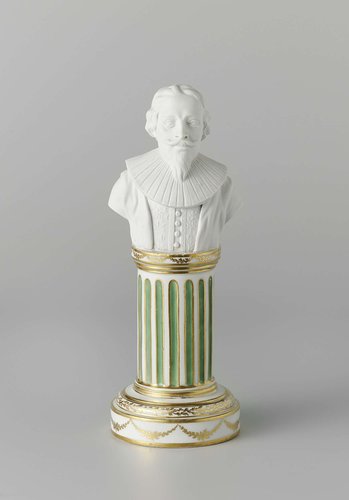
Hugo de Groot (1583-1645)
ca. 1782 - ca. 1784
Medium
porcelain
Dimensions
8.6; 8.5; 8.7; 22.7
Rights
Public Domain
About this artwork
fabrieksmerk, voetstuk, geschilderd in onderglazuurblauw: M.O.L. met ster
Art Historical Context
This elegant porcelain bust portrays Hugo de Groot (1583–1645), the renowned Dutch jurist, philosopher, and statesman whose writings laid foundational principles for international law. Created around 1782–1784 by the Manufacture Oud-Loosdrecht, the piece captures Grotius more than a century after his death, reflecting the late-eighteenth-century Dutch interest in celebrating national intellectual heroes during the Enlightenment era. Crafted in fine porcelain and marked on the base with the factory’s underglaze-blue “M.O.L.” and star, the sculpture exemplifies the refined techniques of Dutch porcelain production at the time. Standing just under 23 centimeters tall, its compact scale suggests it was intended for display in private cabinets or scholarly libraries rather than grand public settings. Such portrait figures allowed collectors to honor Grotius’s legacy—his advocacy for reason, tolerance, and legal order—within the intimate spaces of Enlightenment homes. As a product of Oud-Loosdrecht, one of the Netherlands’ pioneering porcelain manufactories, the bust also highlights the period’s growing technical mastery in European ceramics. The cool, luminous quality of the medium lends a timeless dignity to the subject, transforming a historical figure into an enduring symbol of Dutch cultural achievement.