
Hundred Views of Fuji
1834–35
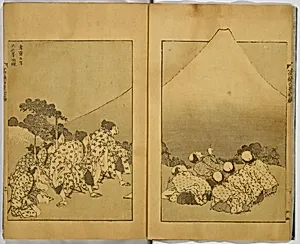
Medium
Ink on paper
Dimensions
9 1/4 x 6 1/4 in. (23.5 x 15.9 cm)
Classification
Illustrated Books
Culture & Period
Japan · Edo period (1615–1868)
Department
Asian Art
Museum
Metropolitan Museum of Art, New York, NY
Credit
Bequest of W. Gedney Beatty, 1941
Accession Number
JIB158a–c
Rights
Public Domain
Tags
Art Historical Context
Katsushika Hokusai’s *Hundred Views of Fuji* (1834–35) is a celebrated illustrated book from Japan’s Edo period, a time when woodblock-printed volumes brought art into everyday households. Created late in the artist’s long career, the work presents Mount Fuji from countless angles, often framed by trees, villages, and ordinary people going about their lives. These intimate scenes transform the sacred mountain into a living presence that connects nature, labor, and daily experience. Printed in ink on paper and measuring just over nine by six inches, the book exemplifies the refined yet accessible style of ukiyo-e illustration. Hokusai’s inventive compositions play with scale and viewpoint, sometimes showing Fuji through the branches of a tree or behind the silhouettes of travelers. Such techniques encouraged viewers to appreciate the mountain’s ever-changing appearance rather than a single iconic image. Today housed in the Metropolitan Museum of Art, *Hundred Views of Fuji* remains a landmark of Japanese graphic art. It captures both the period’s love of travel and landscape and Hokusai’s lifelong fascination with Fuji as a symbol of endurance and beauty.
About the Artist
Katsushika Hokusai · 1760–1849
Katsushika Hokusai (1760-1849) stands as one of history's most influential artists, a Japanese master who revolutionized the ukiyo-e woodblock print tradition and profoundly shaped Western art. Born in the Katsushika district of Edo (modern-day Tokyo) to an artisan family, Hokusai lived through nearly nine decades of extraordinary creative evolution, adopting over thirty different artistic names t...