
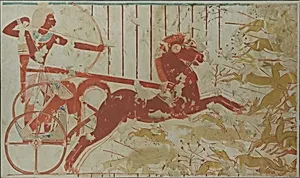
Hunting from a Chariot, Tomb of Userhat
A.D. 1922; original ca. 1427–1400 B.C.
Medium
Tempera on paper
Dimensions
Facsimile: H. 74 cm (29 1/8 in); W. 127 cm (50 in); scale 1:1; Framed: H. 76.8 cm (30 1/4 in); W. 129.5 cm (51 in); Th. 1.9 cm (3/4 in)
Classification
Facsimile, Userhat (TT 56), hunting, chariot
Period
Twentieth Century; original New Kingdom
Department
Egyptian Art
Museum
Metropolitan Museum of Art, New York, NY
Credit
Rogers Fund, 1930
Accession Number
30.4.42
Rights
Public Domain
Tags
About this artwork
This Hunting from a Chariot, Tomb of Userhat by Charles K. Wilkinson dating to A.D. 1922; original ca. 1427–1400 B.C. exemplifies the artistic traditions of Twentieth Century; original New Kingdom, Dynasty 18, Upper Egypt, Thebes. Created in tempera on paper, the work demonstrates technical mastery of materials and processes characteristic of Twentieth Century; original New Kingdom, Dynasty 18, Upper Egypt, Thebes artisans. As part of the Metropolitan Museum of Art's Egyptian Art, this piece con...
Art Historical Context
Step into the thrill of ancient Egypt with *Hunting from a Ch, Tomb of Userhat a stunning 1:1 scale created in 1922 by Charles K. Wilkinson This tempera-on-paper reproduction captures a vibrant wall painting from the New Kingdom's Dynasty 18 (ca. 1427–1400 B.C.), discovered in the Theban tomb of Userhat, noble from Upper Egypt. Measuring 74 cm high by 127 cm wide, it vividly depicts elite hunters in horse-drawn chariots, bows drawn against fleeing deer—a dynamic scene blending action, power, and artistry. In ancient Egyptian tombs, such paintings served profound purposes: ensuring the deceased's eternal prowess in the afterlife while showcasing royal and noble patronage. Dynasty 18, a golden age of pharaohs like Amenhotep III, celebrated these hunts as symbols of virility, divine favor, and harmony with nature. Wilkinson's meticulous facsimile, acquired via the Rogers Fund in 1930, preserves fading pigments and intricate details, from the taut bowstrings to the horses' flowing manes, offering modern viewers an intimate window into Theban tomb artistry. Displayed in the Metropolitan Museum of Art's Egyptian Art collection, this piece highlights early 20th-century efforts to safeguard antiquity, bridging millennia through technical mastery and cultural reverence.
About the Artist
Charles K. Wilkinson · 1897–1986
Charles K. Wilkinson (1897–1986), born Charles Kyrle Wilkinson in London on October 13, 1897, was the son of Horace W. Wilkinson, a stained-glass window maker, and Frances Adkins. Serving in World War I, he honed his artistic skills at the Slade School of Fine Art, University College London, where the influential director Henry Tonks shaped the rigorous training of a generation of draughtsmen. In ...