
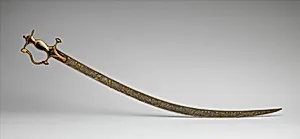
Hunting Sword (Shamshir Shikargar) with Modern Scabbard
Unknown Artist
18th–mid-19th century
Medium
Steel, gold, textile (velvet), wood
Dimensions
H. without scabbard 36 1/2 in. (92.7 cm); W. 4 3/4 in. (12.1 cm); Wt. 2 lb. 3.5 oz. (1006.4 g); Wt. of scabbard 3.1 oz. (87.9 g)
Classification
Swords
Culture
Indian, Rajasthan
Department
Arms and Armor
Museum
Metropolitan Museum of Art, New York, NY
Credit
Bequest of George C. Stone, 1935
Accession Number
36.25.1506a, b
Rights
Public Domain
Tags
Art Historical Context
This exquisite Hunting Sword, known as a *Shamshir Shikargar*,ails from Rajasthan, India, crafted between the 18th and mid-19th centuries. Designed for aristocratic big-game hunts—often targeting tigers, deer, or elephants—the shamshir's distinctive curved steel blade (92.7 cm long) allowed for powerful, slashing strikes from horseback. Rajasthan's royal courts prized such weapons not just for utility but as symbols of status, blending martial prowess with opulent artistry. The sword's hilt and fittings feature intricate gold inlays depicting animals like birds, deer, elephants, and horses, evoking the thrill of the hunt and Rajasthan's vibrant wildlife. Crafted from steel, gold, wood, and velvet (in its modern scabbard), it weighs just over 2 pounds, balancing lethality with elegance. Techniques like gilding and engraving highlight the skilled metalwork of Indian arms makers, transforming a tool of the hunt into a wearable masterpiece. Today, this bequest of George C. Stone resides in the Metropolitan Museum of Art's Arms and Armor Department, offering a window into Rajasthan's princely past. Though the scabbard is contemporary, the blade's timeless design reminds us of an era when nobility chased adventure amid gilded splendor.