
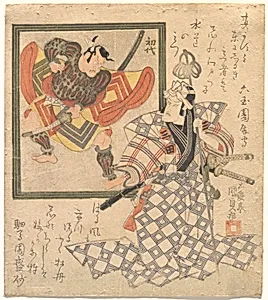
歌川国貞画 七代目市川団十郎と初代市川団十郎|Ichikawa Danjūrō VII Admiring Ichikawa Danjūrō I in an Inset Portrait
1819
Medium
Woodblock print (surimono); ink, color and metallic pigment on paper; shikishiban
Dimensions
8 1/2 x 7 1/2 in. (21.6 x 19.1 cm)
Classification
Prints
Culture & Period
Japan · Edo period (1615–1868)
Department
Asian Art
Museum
Metropolitan Museum of Art, New York, NY
Credit
Purchase, Jack Greene Gift, 2001
Accession Number
2001.715.3
Rights
Public Domain
Tags
Art Historical Context
This exquisite woodblock print, titled *Ichikawa Danjūrō VII Admiring Ichikawa Danjūrō I in an Inset Portrait*, was created by Utagawa Kunisada (Toyokuni III) in 1819 during Japan's Edo period (1615–1868). Kunisada, a master of the ukiyo-e tradition—"pictures of the floating world"—specialized in vibrant depictions of kabuki actors, capturing their dramatic personas with striking realism and flair. Here, the seventh-generation actor Ichikawa Danjūrō gazes reverently at a small inset portrait of his illustrious forebear, the first Danjūrō, founder of the family's renowned aragoto (rough stuff) style, known for bold, superhuman roles wielding swords and embodying heroic intensity. Printed as a luxurious *surimono*—a privately commissioned format often exchanged among elites for New Year's greetings—this shikishiban (square) sheet measures just 8½ x 7½ inches, emphasizing intimacy and refinement. Kunisada employed ink, rich colors, and shimmering metallic pigments to heighten the theatrical glow, evoking the stage's footlights and the actors' storied legacy. Such prints celebrated kabuki's cultural dominance, blending artistry with fandom in Edo's bustling theater district. Housed in the Metropolitan Museum of Art's Asian Art Department (Purchase, Jack Greene Gift, 2001), this work exemplifies how ukiyo-e bridged popular entertainment and fine art, immortalizing Japan's performative heritage for admirers then and now.
About the Artist
Utagawa Kunisada · 1786–1864
**Utagawa Kunisada (1786–1865)** Born in 1786 in the Honjo district of Edo (modern Tokyo), Utagawa Kunisada hailed from a family with a hereditary ferry-boat service that provided financial stability, allowing him to pursue art from a young age. His father, an amateur poet of note, died shortly after his birth, leaving young Sumida Shōgorō (Kunisada's childhood name) to nurture his evident talent...