
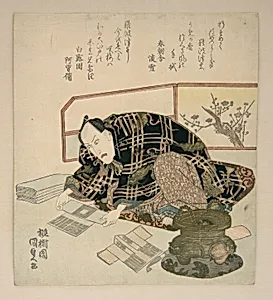
歌川国貞画 浪花土産を作る七代目市川団十郎|Ichikawa Danjūrō VII Preparing New Year's Gifts
ca. 1830
Medium
Woodblock print (surimono); ink, color and metallic pigments on paper; shikishiban
Dimensions
Image: 8 1/4 × 7 1/4 in. (21 × 18.4 cm)
Classification
Prints
Culture & Period
Japan · Edo period (1615–1868)
Department
Asian Art
Museum
Metropolitan Museum of Art, New York, NY
Credit
Gift of Dorothy Tapper Goldman, 2013
Accession Number
2013.1126.2
Rights
Public Domain
Tags
Art Historical Context
This charming woodblock print by Utagawa Kunisada captures the celebrated kabuki actor Ichikawa Danjūrō VII preparing New Year’s gifts, a scene that blends everyday ritual with theatrical elegance. Created around 1830 during Japan’s Edo period, the work reflects the vibrant culture of kabuki theater, which captivated audiences across social classes. Kunisada, a leading figure in the Utagawa school, specialized in actor portraits known as yakusha-e, skillfully portraying the charisma and distinctive features of stage stars like Danjūrō VII, whose family lineage was famed for bold, heroic roles. The print is a surimono, a privately commissioned format often exchanged as seasonal greetings. Its square shikishiban size and use of metallic pigments highlight the luxurious quality of these works, which frequently combined images with poetry. Here, the actor’s refined pose and the carefully rendered gift boxes evoke both personal refinement and the festive spirit of the New Year in early nineteenth-century Japan. Such prints served as treasured souvenirs for theater fans, preserving the fleeting glamour of performances while celebrating cultural traditions of hospitality and renewal.
About the Artist
Utagawa Kunisada · 1786–1864
**Utagawa Kunisada (1786–1865)** Born in 1786 in the Honjo district of Edo (modern Tokyo), Utagawa Kunisada hailed from a family with a hereditary ferry-boat service that provided financial stability, allowing him to pursue art from a young age. His father, an amateur poet of note, died shortly after his birth, leaving young Sumida Shōgorō (Kunisada's childhood name) to nurture his evident talent...