
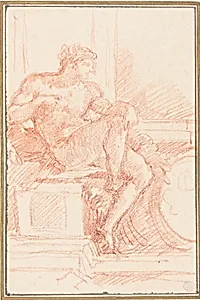
Ignudo from Sistine Chapel ceiling
Medium
figures
Classification
figures
Department
Smithsonian Collection
Museum
Smithsonian American Art Museum
Credit
Gift of Noah Butkin
Accession Number
1977-110-1-30
Rights
Public Domain
About this artwork
Research in Progress
Art Historical Context
Behold the *Ignudo from Sistine Chapel Ceiling*, a captivating figure crafted by French artist Jean-Robert Ango during his time in Rome (ca. 1759–70). Active in the Eternal City from 1759 to 1770 and passing in 1773, Ango was part of a vibrant community of European artists drawn to Italy's Renaissance treasures. This work evokes one of Michelangelo's iconic *ignudi*—those powerful, seated male nudes from the Sistine Chapel ceiling (1508–12)—translating the master's vision into a three-dimensional study likely intended for artistic training or admiration. In the 18th century, copying renowned works like Michelangelo's was a cornerstone of artistic education, allowing painters and sculptors to master anatomy, proportion, and dynamic posing. Ango's rendition captures the ignudo's robust musculature and contrapposto grace, hallmarks of High Renaissance humanism that celebrated the idealized male form. As a "figure" in sculpture or plaster, it exemplifies the era's tactile approach to classical revival, bridging Italy's past with France's Enlightenment-era fascination with antiquity. Today, this piece graces the Smithsonian American Art Museum, a generous gift from Noah Butkin. Though research continues, it reminds us of art's timeless dialogue—how one generation's genius inspires the next, inviting us to ponder the enduring allure of the human body in motion.