
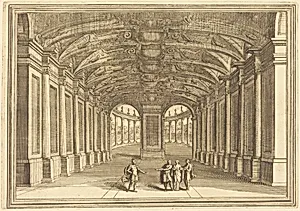
Il Greco in Troia: Plate 10
1651 to 1700
Medium
etching and engraving on laid paper [restrike]
Classification
Department
CG-E
Museum
National Gallery of Art, Washington, D.C.
Credit
Transferred from The Library of Congress
Accession Number
1986.50.207
Rights
Public Domain
Art Historical Context
**Il Greco in Troia: Plate 10** is a captivating print by Flemish engraver Arnold von Westerhout (1651–1725), created between 1651 and 1700 as part of a series depicting dramatic scenes from the Trojan War. The title, translating to "The Greek in Troy," evokes the epic clashes of Homer's *Iliad*, with Plate 10 likely capturing a tense moment involving Greek heroes amid the ancient conflict. Westerhout, who worked extensively in Rome, was renowned for his reproductive prints that brought grand Baroque compositions to wider audiences, making classical mythology accessible beyond elite patrons. Crafted through etching and engraving on laid paper—a restrike from the original plate—this work showcases the meticulous techniques of 17th-century printmaking. Etching allowed fluid, expressive lines for dynamic figures and architecture, while engraving added sharp detail and depth, ideal for conveying the chaos of battle and intricate costumes. Laid paper, with its visible chain lines, was a hallmark of fine European prints, ensuring durability and prestige. Housed in the National Gallery of Art's Prints department (transferred from the Library of Congress), this piece highlights the era's cultural fascination with antiquity, bridging classical literature and Baroque drama. Visitors will appreciate how Westerhout's skill preserved these timeless narratives, inviting us to ponder the heroism and tragedy of Troy.