
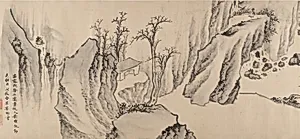
明 張瑞圖 後赤壁賦圖 卷|Illustration of Su Shi’s “Second Ode on Red Cliff”
dated 1628
Medium
Handscroll; ink on satin
Dimensions
Image: 11 in. x 10 ft. 6 in. (27.9 x 320 cm) Overall with mounting: 12 1/4 in. x 34 ft. 2 3/4 in. (31.1 x 1043.3 cm)
Classification
Paintings
Culture & Period
China · Ming dynasty (1368–1644)
Department
Asian Art
Museum
Metropolitan Museum of Art, New York, NY
Credit
Bequest of John M. Crawford Jr., 1988
Accession Number
1989.363.108
Rights
Public Domain
Tags
Art Historical Context
Step into the poetic world of Ming dynasty artist Zhang Ruitu with his 1628 handscroll *Illustration of Su Shi’sSecond Ode on Red Cliff”*. This exquisite ink-on-satin painting vividly captures the essence of Su Shi’s famous11th-century Song dynasty, evoking a moonlit boat journey along the Yangtze River near the historic Red Cliff. Towering mountains, misty waters, and scholarly figures unfold in a continuous landscape narrative, inviting viewers to unroll the scroll slowly, as was traditional in Chinese art. Crafted during the late Ming period (1368–1644), when literati painters like Zhang emphasized expressive brushwork over realism, the work showcases the handscroll format’s intimacy—measuring over 34 feet when fully mounted. Ink washes on satin create subtle textures, blending rugged cliffs and serene rivers to reflect the poem’s themes of historical reflection and nature’s grandeur. This technique highlights the Orthodox school’s revival of Song ideals, prioritizing emotional depth and scholarly elegance. Housed in the Metropolitan Museum of Art, this bequest from John M. Crawford Jr. exemplifies Ming cultural reverence for classical literature. It transports us to Red Cliff, site of the pivotal Three Kingdoms battle, reminding visitors of China’s enduring fusion of poetry, philosophy, and painting. (198 words)
About the Artist
Zhang Ruitu · 1570–1641
Chinese, 1570–1641