
群仙図屏風|Immortals
ca. 1620s–30s
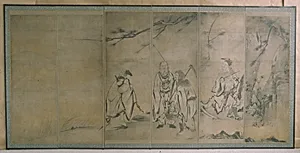
Medium
Six-panel folding screen; ink and gold on paper
Dimensions
58 1/4 in. × 10 ft. 1 3/4 in. (147.9 × 309.2 cm)
Classification
Paintings
Culture & Period
Japan · early Edo period (1615–1868)
Department
Asian Art
Museum
Metropolitan Museum of Art, New York, NY
Credit
Fletcher Fund, 1933
Accession Number
33.89
Rights
Public Domain
Tags
Art Historical Context
Behold the ethereal *Immortals* (群仙図屏風), a magnificent six-panel folding screen bygawa Sakon, created around the 1620s–30s during Japan's early Edo period (1615–1868). Crafted in ink and gold on paper, this work spans an impressive 58¼ × 121¾ inches (147.9 × 309.2 cm), designed to unfold like a golden landscape alive with divine figures amid lush trees. Acquired through the Fletcher Fund in 3, it graces the Metropolitan Museum of Art's Asian Art collection. In the prosperous Edo era, under the Tokugawa shogunate's stability, byōbu screens like this transformed elite interiors into immersive worlds. The theme of immortals—likely inspired by Chinese Daoist lore—celebrates longevity, harmony with nature, and transcendence, with robed men gathered in serene, wooded scenes. Hasegawa Sakon's masterful ink brushwork captures flowing robes, gnarled branches, and misty atmospheres, evoking the Kano school's monumental style while adding poetic intimacy. The gold-leaf ground, a hallmark of Japanese screen painting, shimmers with light, suggesting an otherworldly realm where heaven meets earth. This technique not only preserved the artwork's vibrancy but also symbolized imperial splendor and spiritual purity, making *Immortals* a captivating window into Edo Japan's artistic golden age.