
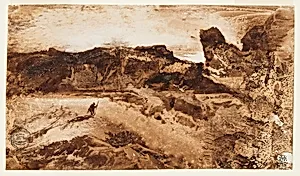
In the Desert, Arizona
Medium
landscapes
Classification
landscapes
Department
Smithsonian Collection
Museum
Smithsonian American Art Museum
Credit
Gift of Thomas Moran
Accession Number
1917-17-43
Rights
Public Domain
About this artwork
Research in Progress
Art Historical Context
Thomas Moran's *In the Desert, Arizona (1878) captures the vast, sun-drenched expanses of the American Southwest a theme central to this British-born artist's celebrated career. Born in 1837 and later becoming a key figure in American art, Moran renowned for his luminous landscapes that romanticized the nation's wild frontiers. Working primarily in oil and watercolor, he joined government expeditions in the 1870s, sketching dramatic vistas to inspire public awe and support for national parks like Yellowstone. This painting reflects the post-Civil War era's westward expansion, when artists like Moran—associated with the Hudson River School—elevated rugged terrains into symbols of national identity. His masterful use of light and atmosphere creates a glowing, almost ethereal quality, emphasizing the desert's stark beauty and isolation. Arizona's arid canyons and mesas, though less documented here amid ongoing research, evoke the sublime power of untamed nature. Gifted by Moran himself to the Smithsonian American Art Museum, the work underscores his legacy as a bridge between exploration and art. Visitors today can appreciate how it fueled America's conservation movement, inviting us to ponder the enduring allure of the desert's silent majesty. (198 words)