
Inari-ko|The Second Month
ca. 1767
Medium
Woodblock print; ink and color on paper
Dimensions
H. 10 in. (25.4 cm); W. 7 3/8 in. (18.7 cm)
Classification
Prints
Culture & Period
Japan · Edo period (1615–1868)
Department
Asian Art
Museum
Metropolitan Museum of Art, New York, NY
Credit
Gift of Estate of Samuel Isham, 1914
Accession Number
JP850
Rights
Public Domain
Tags
Art Historical Context
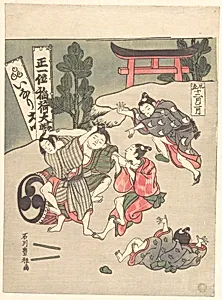
**Inari-ko (The Second Month)** by Ishikawa Toyomasa created around 1767, is a woodblock print from Japan's Edo period (16151868). Measuring just 10 by 7⅜ inches, this intimate ink and color on paper work captures a lively moment likely tied to the second lunar month, evoking spring festivals like Setsubun or Inari celebrations honoring the rice deity with fox messengers. Toyomasa, a ukiyo-e known for vibrant depictions of festivals, children, and daily life, showcases boys energetically drumming—symbols of youthful exuberance and communal joy in urban Edo (modern Tokyo). Woodblock printing, a hallmark of ukiyo-e ("pictures of the floating world"), allowed mass production of affordable art for the rising merchant class. Toyomasa's skillful use of carved wood blocks layered vibrant colors and fine lines, bringing texture to the boys' dynamic poses and rhythmic drums. This technique democratized beauty, reflecting Edo society's fascination with ephemerality and pleasure. Housed in the Metropolitan Museum of Art's Asian Art Department, this print (gift of the Estate of Samuel Isham, 1914) offers a window into 18th-century Japanese culture, where children's festivals fostered community bonds and warded off evil spirits. A delightful snapshot of tradition and play, it reminds us of art's power to preserve fleeting festivities.