
Incense Box
Unknown Artist
19th century
Medium
Bronze
Dimensions
H. 3 5/8 in. (9.2 cm); W. 3 in. (7.6 cm)
Classification
Metalwork
Culture & Period
Japan · Edo (1615–1868) or Meiji period (1868–1912)
Department
Asian Art
Museum
Metropolitan Museum of Art, New York, NY
Credit
Edward C. Moore Collection, Bequest of Edward C. Moore, 1891
Accession Number
91.1.514a–e
Rights
Public Domain
Tags
Art Historical Context
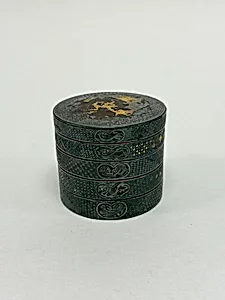
This delicate bronze incense box, crafted by an unknown Japanese artist in the 19 century, exemplifies the refined metalwork of the late Edo period (1615–1868) or early Meiji era (1868–1912). Measuring just 3⅝ inches high and 3 inches wide its compact form was designed to hold fragrant incense woods, essential for rituals, tea ceremonies, and the contemplative "incense games" (kōdō) popular among samurai and elites. Adorned with dynamic dragon motifs—powerful symbols of imperial authority, protection, and good fortune—the box showcases the era's mastery of bronze casting, where artisans achieved intricate detailing and subtle patinas through meticulous hammering and chasing techniques. In Japan's Edo and Meiji periods, such objects bridged utilitarian function and artistic expression, reflecting a cultural reverence for sensory refinement amid rapid modernization. Dragons, often depicted in fluid, cloud-entwined forms, evoked Shintō and Buddhist mythology, infusing everyday items with spiritual depth. Part of the Metropolitan Museum of Art's Edward C. Moore Collection (bequest of 1891), this piece highlights the West's growing fascination with Japanese craftsmanship during the late 19th century, offering visitors a tangible glimpse into a world of elegant restraint and mythical grandeur.