
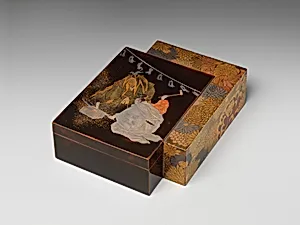
明治時代 古満派 小鍛冶蒔絵香箱|Incense Box with Scene from Noh Play Kokaji
second half of the 19th century
Medium
Black lacquer with gold, silver, and red hiramaki-e and togidashimaki-e
Dimensions
H. 1 3/8 in. (3.5 cm); W. 3 1/2 in. (8.9 cm); L. 4 3/8 in. (11.1 cm)
Classification
Lacquer
Culture & Period
Japan · Meiji period (1868–1912)
Department
Asian Art
Museum
Metropolitan Museum of Art, New York, NY
Credit
The Howard Mansfield Collection, Purchase, Rogers Fund, 1936
Accession Number
36.100.160a–c
Rights
Public Domain
Tags
Art Historical Context
This exquisite incense box, crafted by the venerable Koma School during the Meiji period (1868–1912), captures a dramatic scene from the Noh play *Kokaji* ("The Little Smith"). Produced in the second half of 19th century, exemplifies Japan's enduring mastery of lacquerware amid rapid modernization. The Koma School, rooted in centuries-old traditions, specialized in intricate maki-e designs, blending artistry with functionality for elite patrons. The box's black lacquer ground shimmers with gold, silver and red hiramaki—flat-sprinkled metal powders—and togidashimaki-e, a burnished technique that reveals underlying layers for a luminous effect. Depicting men amid flowers, it evokes the theatrical intensity of Noh, where the swordsmith Kokaji forges a legendary blade under supernatural influence. At just 3.5 cm high and 11.1 cm long, its compact form was ideal for carrying fragrant incense, a refined accessory in Japanese tea ceremonies and daily rituals. Housed in the Metropolitan Museum of Art's Asian Art collection (from The Howard Mansfield Collection, 1936), this piece highlights Meiji lacquer's cultural prestige—exported worldwide yet preserving Edo-era techniques. It invites visitors to appreciate how such miniature marvels bridged tradition and innovation.