
Incense Burner
Unknown Artist
11th century
Medium
Bronze; cast, chased, and pierced
Dimensions
H. 9 3/4 in. (24.8 cm) W. 10 in. (25.4 cm) D. 4 1/4 in. (10.8 cm)
Classification
Metal
Department
Islamic Art
Museum
Metropolitan Museum of Art, New York, NY
Credit
Purchase, Joseph Pulitzer Bequest, 1967
Accession Number
67.178.3a, b
Rights
Public Domain
Art Historical Context
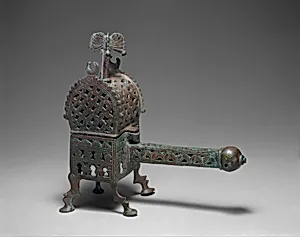
Nestled in the Islamic Art galleries of the Metropolitan Museum of, this 11th-century bronze incense burner stands as a testament to the exquisite metalworking traditions of the medieval Islamic world. Measuring about 10 inches wide and nearly 10 inches tall, its compact form—ideal for a tabletop or niche—features a pierced body that allows aromatic smoke to waft gracefully through intricate openwork designs. Crafted by an unknown artist, it was cast in molten bronze, then meticulously chased (hammered with fine tools to create raised motifs from the interior) and pierced, showcasing the technical virtuosity of artisans who transformed utilitarian objects into sculptural masterpieces. In the 11th century, during a golden age of Islamic culture under dynasties like the Seljuks and Buyids, incense burners like this one played a vital role in daily and ritual life. Burning fragrant resins such as oud or frankincense, they perfumed mosques, homes, and palaces, symbolizing hospitality, purification, and spiritual elevation. The lavish surface decoration—likely floral arabesques or geometric patterns—reflects the Islamic aversion to figural representation in sacred contexts, favoring instead hypnotic, infinite motifs that evoke the divine. This rare survivor, acquired through the Joseph Pulitzer Bequest in 1967, invites you to imagine the sensory allure of a bygone era: the glow of candlelight dancing on its burnished bronze, mingling with sweet, smoky scents. A highlight for lovers of Islamic metalwork, it underscores how craftsmanship elevated everyday rituals into art.