
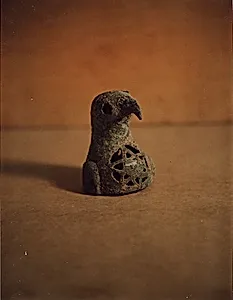
Incense Burner
Unknown Artist
12th–13th century
Medium
Bronze; cast
Dimensions
H. 3 1/4 in. (8.25 cm) W. 2 11/16 in. (6.8 cm) D. 2 5/8 in. (6.7 cm) Wt. 5.9 oz. (167.3 g)
Classification
Metal
Department
Islamic Art
Museum
Metropolitan Museum of Art, New York, NY
Credit
Gift of Richard S. Perkins, 1969
Accession Number
69.211
Rights
Public Domain
Tags
Art Historical Context
This exquisite bronze incense burner, crafted an unknown artist in the th–13th century exemplifies the refined metalworking traditions of the Islamic world. Standing just 3¼ inches tall and weighing a mere 5.9 ounces, its form—roughly 2⅝ to 2⅔ inches wide and deep—suggests it was designed for portability, perhaps for personal use in homes, travel, or religious settings. The cast bronze medium allowed for intricate detailing, with motifs likely featuring birds, as indicated by its classification, evoking the natural world so cherished in Islamic decorative arts. During the medieval Islamic golden age, incense burners like this one held profound cultural and ritual significance. Burning fragrant resins such as frankincense or oud was integral to daily life, hospitality, prayer, and purification ceremonies in mosques and palaces across regions like Persia, Syria, and Egypt. These objects not only released soothing aromas but also symbolized spiritual elevation and divine presence, blending utility with artistry. The lost-wax casting technique employed here highlights the technical mastery of Islamic artisans, enabling finely wrought surfaces that could depict symbolic birds—often representing paradise gardens or divine messengers. Now housed in the Metropolitan Museum of Art's Islamic Art Department, thanks to a 1969 gift from Richard S. Perkins, this modest treasure invites visitors to appreciate the everyday elegance of medieval Islamic craftsmanship.