
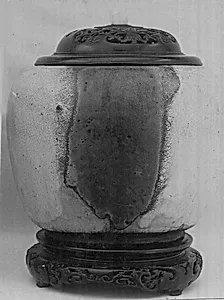
Incense Burner
Unknown Artist
19th century
Medium
Clay covered with a crackled glaze and a white and green overglaze (Kiyomizu ware)
Dimensions
H. 7 1/2 in. (19.1 cm); Diam. 9 1/4 in. (23.5 cm)
Classification
Ceramics
Culture & Period
Japan · Edo (1615–1868) or Meiji period (1868–1912)
Department
Asian Art
Museum
Metropolitan Museum of Art, New York, NY
Credit
Rogers Fund, 1912
Accession Number
12.37.172a, b
Rights
Public Domain
Art Historical Context
This exquisite incense burner, crafted in the 19th century during Japan's Edo (1615–1868) or early Meiji (1868–1912) period, exemplifies Kiyomizu ware—a renowned style of ceramics from Kyoto's Kiyomizu district. 7½ inches tall and 9¼ inches in diameter, the piece is made of clay coated with a distinctive crackled glaze, enhanced by delicate white and green overgl. These vibrant enamels, fired at lower temperatures over a base glaze, allowed artisans to create intricate, colorful designs that captured the elegance of everyday ritual objects. In Japanese culture, incense burners like this one played a central role in *kōdō* (the art of incense appreciation), tea ceremonies, and Buddhist home altars. During the Edo era's prosperous urban culture, such items brought serenity and refinement to domestic life, while Meiji innovations blended tradition with emerging export aesthetics. Kiyomizu ware's overglaze technique, popularized in the late 17th century, made it a favorite for both local elites and international collectors. Acquired by The Metropolitan Museum of Art through the Rogers Fund in 1912, this anonymous masterpiece invites visitors to ponder the sensory world of 19th-century Japan—where sight, scent, and spirituality converged in humble clay.